
Embark on a journey into the world of industrial-style home decor, where raw materials and rugged aesthetics blend seamlessly to create a unique urban vibe that captivates the senses.
Explore the essence of industrial design and discover how you can infuse your living spaces with a touch of industrial chic that exudes character and sophistication.
Industrial-Style Home Decor
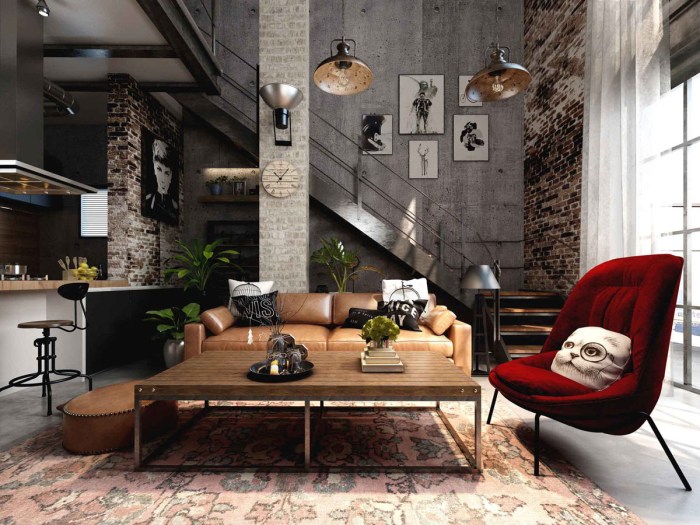
Industrial-style home decor takes inspiration from old factories and industrial spaces, combining raw and rugged elements with sleek and modern touches. Key features include exposed brick walls, metal accents, concrete floors, and vintage or salvaged furnishings. This style often incorporates a mix of materials like wood, steel, and leather to create a unique and edgy look.
Examples of Industrial-Style Decor Elements
- Exposed brick walls add texture and character to a space, giving it an industrial feel.
- Metal accents such as steel beams, pipes, and light fixtures provide a touch of industrial charm.
- Rustic furnishings like distressed wood tables, leather sofas, and vintage industrial stools enhance the overall aesthetic.
Incorporating Industrial-Style Design
Industrial-style decor can be incorporated into different rooms of a house by mixing industrial elements with softer textures and colors. In the living room, you can add an industrial coffee table or shelving unit paired with cozy rugs and plush sofas. In the kitchen, metal pendant lights and exposed shelves can complement wooden countertops and subway tile backsplashes. Bedrooms can feature metal bed frames, industrial-style lighting, and soft bedding for a perfect blend of rugged and cozy.
Comparison with Other Interior Design Styles
Industrial-style decor differs from minimalism by embracing a more rugged and eclectic look with a focus on raw materials and vintage finds. In contrast, bohemian design is characterized by a mix of colors, patterns, and textures, creating a more eclectic and free-spirited vibe. While minimalism aims for simplicity and clean lines, industrial style celebrates imperfections and authenticity, making it a bold and unique choice for those who appreciate a touch of urban flair in their home.
Home Inspections
Before purchasing a property, conducting a home inspection is crucial to ensure that the house is in good condition and to avoid any potential problems in the future.
Key Areas Inspected
- Structural integrity: Inspectors will look for any signs of foundation issues, water damage, or structural damage.
- Roof: The condition of the roof, including shingles, flashing, and gutters, is examined for any leaks or damage.
- Plumbing: Inspectors check for leaks, water pressure, and proper drainage throughout the house.
- Electrical systems: The electrical wiring, outlets, and circuit breakers are inspected to ensure they are up to code.
- HVAC systems: Heating, ventilation, and air conditioning systems are checked for functionality and efficiency.
Common Issues and Implications
- Water damage: Can lead to mold growth, structural damage, and health hazards.
- Roof leaks: May result in interior damage, mold, and costly repairs.
- Electrical problems: Fire hazards, power outages, and safety concerns can arise from faulty wiring.
- Plumbing issues: Leaks, water damage, and poor water pressure can affect the functionality of the house.
Tips for Preparation
- Clean and declutter the house to allow easy access to all areas for inspection.
- Make a list of any known issues or repairs that have been done on the property.
- Ensure all utilities are turned on for the inspector to check systems like HVAC, plumbing, and electrical.
- Be present during the inspection to ask questions and get a better understanding of the condition of the house.
Kitchen Improvements
Industrial-style kitchen design is all about combining raw, rugged materials with sleek finishes to create a modern yet edgy look. When it comes to incorporating an industrial theme into your kitchen, there are several key elements to consider.
Incorporating Industrial Style
- Utilize stainless steel appliances and fixtures to add a professional and polished look to the space.
- Integrate concrete countertops or flooring for an industrial feel that is both durable and stylish.
- Incorporate reclaimed wood elements such as open shelving or a rustic dining table to bring warmth and texture to the space.
Renovating on a Budget
- Consider painting existing cabinets with a matte black finish to achieve an industrial look without the cost of replacing them.
- DIY projects like creating your own industrial-style light fixtures using metal pipes and Edison bulbs can add a unique touch to the kitchen.
- Opt for affordable options like laminate flooring that mimics the look of concrete or distressed wood for a budget-friendly industrial vibe.
Enhancing with Lighting Fixtures
- Industrial-style pendant lights with exposed bulbs and metal finishes can serve as focal points in the kitchen, adding both function and style.
- Track lighting systems can be used to illuminate specific areas of the kitchen while maintaining the industrial aesthetic with their sleek design.
- Consider installing industrial-style wall sconces or vintage-inspired fixtures to enhance the overall ambiance of the space.
Home Improvement and Furniture
Industrial-style furniture plays a crucial role in enhancing the overall look and feel of a home decorated in an industrial theme. The right furniture pieces can bring in elements of rawness, ruggedness, and functionality that define industrial design aesthetic.
Examples of Industrial-Style Furniture Pieces
- Metal Chairs: Industrial-style metal chairs with clean lines and exposed rivets add a touch of industrial charm to any space.
- Distressed Tables: Weathered wood or metal tables with a distressed finish can serve as a focal point in an industrial-themed room.
- Leather Sofas: A leather sofa with a worn-in look complements industrial decor by adding warmth and texture to the space.
Tips for Mixing Industrial Furniture with Other Styles
- Balance: Combine industrial pieces with softer elements like textiles and greenery to create a balanced look.
- Contrast: Mix industrial furniture with modern or vintage pieces for an eclectic and visually interesting space.
- Color Palette: Stick to a neutral color palette with pops of industrial materials like metal and wood for cohesion.
Repurposing Existing Furniture for an Industrial Theme
Repurposing existing furniture is a cost-effective way to incorporate industrial style into your home. Consider techniques like distressing wood, painting metal pieces in matte finishes, or adding industrial hardware like metal legs to existing furniture to give them an industrial flair.
Flooring
When it comes to flooring options for an industrial-style home, there are a few key choices that work well with the aesthetic. Concrete, hardwood, and polished concrete are popular options that can complement the overall look and feel of an industrial space.
Suitable Flooring Options
- Concrete: Durable and versatile, concrete flooring is a common choice for industrial spaces. It provides a modern, minimalist look and can be stained or polished for a more polished finish.
- Hardwood: Hardwood flooring adds warmth and character to an industrial-style home. It can soften the space while still maintaining a rugged feel.
- Polished Concrete: Polished concrete offers a sleek and modern look that is easy to clean and maintain. It can also reflect light, brightening up the space.
Benefits and Drawbacks
- Concrete: Benefits include durability and low maintenance, but drawbacks may include a cold feel and potential cracking over time.
- Hardwood: Benefits include warmth and character, but drawbacks may include susceptibility to scratches and water damage.
- Polished Concrete: Benefits include a modern look and easy maintenance, but drawbacks may include a hard feel underfoot and the need for regular resealing.
Maintaining and Caring for Flooring
- Regularly sweep or vacuum to remove dirt and debris.
- Use a damp mop with a mild cleaner to clean the floors.
- Protect floors from heavy furniture with felt pads.
- Seal concrete floors periodically to maintain their finish.
Rugs and Carpets
When it comes to adding softness and texture to industrial-style flooring, rugs and carpets can be a great addition. Look for rugs with a distressed or worn look, industrial patterns, or neutral colors to complement the overall aesthetic of the space.
Green Living
Industrial-style design can easily be combined with eco-friendly practices to create a sustainable home. By incorporating recycled materials, energy-efficient appliances, and indoor plants, you can reduce waste and promote sustainability in a home with an industrial aesthetic.
Recycled Materials and Energy-Efficient Appliances
Using recycled materials such as reclaimed wood, metal, or concrete can add unique character to industrial-style homes while reducing the demand for new resources. Energy-efficient appliances not only help reduce electricity consumption but also contribute to a more sustainable lifestyle.
Creating an Indoor Garden
Adding an indoor garden or incorporating plants into industrial decor can improve air quality, reduce stress, and enhance the overall aesthetic of the space. Consider using hanging planters, vertical gardens, or potted plants to bring nature indoors.
Reducing Waste and Promoting Sustainability
To reduce waste and promote sustainability in an industrial-style home, consider implementing recycling systems, composting organic waste, and using eco-friendly cleaning products. Upcycling furniture or decor items can also add a unique touch to the space while minimizing environmental impact.
Interior Design and Decorating
Industrial-style interior design focuses on creating a balance between raw, unfinished elements and sleek, modern finishes. Symmetry plays a crucial role in achieving a cohesive look that showcases the industrial aesthetic.
The Importance of Balance and Symmetry
In industrial-style interior design, balance and symmetry help create a harmonious space by blending contrasting elements. It’s essential to balance the rough textures of exposed brick, concrete, or metal with softer elements like plush furniture or textiles. Symmetry can be achieved through carefully placing furniture and decor items to create a visually pleasing arrangement.
Selecting Color Schemes
When selecting color schemes for industrial decor, opt for a palette of neutral tones like gray, black, white, and brown to complement the industrial aesthetic. Accents of bold colors like deep reds, blues, or greens can add a pop of color and contrast to the space.
Incorporating Artwork and Decor Accessories
To enhance the industrial style, incorporate artwork and decor accessories that feature industrial motifs like gears, machinery, or urban landscapes. Metal wall art, vintage signage, and salvaged industrial elements can add character and interest to the space.
Creating a Focal Point
To create a focal point in a room with industrial design elements, consider highlighting a statement piece like a reclaimed wood dining table, industrial light fixture, or exposed brick wall. This focal point draws attention and anchors the space, serving as a visual centerpiece.
Bath and Shower
To achieve an industrial-style bathroom, incorporating features such as exposed pipes, concrete sinks, and metal fixtures can create a raw and edgy aesthetic that is characteristic of industrial design. These elements add a sense of ruggedness and utilitarian charm to the space.
Selecting Industrial-Style Tiles
When selecting tiles for an industrial-style bathroom, opt for materials like concrete, slate, or metal-inspired tiles. These materials have a weathered or industrial look that complements the overall design scheme. Consider using larger format tiles to create a seamless and modern look.
Importance of Proper Ventilation
Proper ventilation is crucial in an industrial-style bathroom to prevent moisture buildup and mold growth. Installing an exhaust fan or a window can help maintain good air circulation and prevent humidity-related issues. This is especially important in a bathroom with exposed pipes and concrete elements.
Storage Solutions in Industrial Aesthetic
Incorporate storage solutions that align with the industrial aesthetic, such as metal shelves, wire baskets, or vintage cabinets. These pieces not only provide functional storage but also contribute to the overall industrial vibe of the bathroom. Look for items with a distressed or aged finish to enhance the industrial look.
House Plans
Industrial design aesthetic can be seamlessly incorporated into house plans to create a unique and modern living space. From adapting existing plans to working with architects for custom designs, there are various ways to achieve an industrial-style home.
Adapting House Plans for Industrial Aesthetic
Adapting house plans to accommodate an industrial design aesthetic involves focusing on key elements such as open spaces, high ceilings, and exposed materials like brick, steel, and concrete. By incorporating these features into the layout, you can create a sleek and industrial look throughout the entire home.
Layout Considerations
When planning an industrial-style home, layout considerations play a crucial role. Opt for open floor plans that allow for seamless transitions between living spaces. High ceilings can further enhance the industrial feel, creating a sense of spaciousness and grandeur.
Working with Architects for Custom Designs
Collaborating with architects who specialize in industrial design can help bring your vision to life. Discuss your preferences for industrial elements, such as metal finishes, raw materials, and oversized windows, to create a custom home that reflects your unique style.
Incorporating Industrial Elements into Existing House Plans
For renovation projects, incorporating industrial elements into existing house plans can breathe new life into a space. Consider adding industrial lighting fixtures, exposed pipes, and reclaimed wood accents to infuse a touch of industrial charm into your home design.
Feng Shui
Feng Shui is an ancient Chinese practice that focuses on creating harmony and balance in living spaces to promote well-being and positive energy flow. When applied to industrial-style homes, Feng Shui principles can enhance the overall atmosphere and create a more inviting and comfortable environment.
Applying Feng Shui in Industrial-Style Homes
Feng Shui can be incorporated into industrial-style homes by following these tips:
- Avoid clutter: Keep the space organized and free of unnecessary items to allow energy to flow freely.
- Use natural elements: Incorporate plants, natural light, and materials like wood and stone to bring balance to the industrial aesthetic.
- Position furniture thoughtfully: Arrange furniture in a way that promotes conversation and allows for easy movement throughout the space.
- Balance yin and yang: Balance the masculine industrial elements with softer textures and colors to create a harmonious space.
Enhancing Energy Flow in Industrial-Style Homes
To enhance the flow of energy in an industrial-style home through Feng Shui practices, consider the following:
- Use mirrors strategically: Place mirrors to reflect natural light and expand the space, creating a sense of openness.
- Introduce water elements: Incorporate water features or a small fountain to promote the flow of energy and create a soothing atmosphere.
- Clear pathways: Ensure that pathways are clear and unobstructed to allow energy to move freely throughout the space.
- Avoid sharp corners: Soften sharp edges with plants, rounded furniture, or decorative items to prevent stagnant energy flow.
Heating and Air Conditioning
Proper heating and air conditioning are essential components of an industrial-style home. These systems not only help maintain a comfortable temperature but also play a crucial role in preserving the integrity of industrial decor.
Best HVAC Systems for Industrial Settings
- Consider installing a ductless mini-split system, which allows for individualized temperature control in different areas of the home.
- Opt for a variable refrigerant flow (VRF) system that offers energy-efficient heating and cooling, ideal for large industrial spaces.
- Invest in a rooftop HVAC unit for centralized heating and cooling, commonly used in industrial buildings for effective temperature regulation.
Optimizing Energy Efficiency
- Ensure proper insulation in walls, floors, and ceilings to prevent heat loss and reduce energy consumption.
- Use programmable thermostats to adjust temperature settings based on occupancy patterns, saving energy when spaces are unoccupied.
- Regularly maintain HVAC systems by cleaning filters, checking for leaks, and scheduling professional inspections to optimize their performance.
Integrating HVAC Systems into Industrial Decor
- Choose HVAC units with sleek, industrial-inspired designs that complement the overall aesthetic of the space.
- Conceal ductwork and vents using creative solutions like exposed metal pipes or overhead ducts to blend seamlessly with industrial decor.
- Incorporate industrial-style fans, radiators, or heating elements as decorative accents that serve a functional purpose within the space.
Unleash your creativity and reimagine your home with the industrial-style aesthetic, transforming mundane spaces into extraordinary showcases of urban charm and timeless elegance.
Key Questions Answered
How can I incorporate industrial-style decor in a small space?
To make the most of limited space, focus on key industrial elements like exposed brick or metal accents, use multi-functional furniture pieces, and maximize natural light to create an illusion of spaciousness.
What color palette works best for industrial-style decor?
Opt for neutral tones like grays, blacks, and whites as a base, and then add pops of color through accent pieces like vibrant artwork or industrial-themed decor accessories to inject personality into the space.
Is industrial-style decor suitable for a modern home?
Absolutely! Industrial design blends seamlessly with modern aesthetics, adding a touch of urban grit and sophistication to contemporary interiors. The key is to balance industrial elements with sleek, minimalist furniture for a harmonious look.


