
Embark on a journey to optimize your home’s ventilation with practical strategies and insightful tips. Discover the key to a healthier and more comfortable living environment through improved airflow.
Explore methods, home inspections, kitchen upgrades, and more to ensure your space is well-ventilated and conducive to your well-being.
Introduction to Home Ventilation
Having good home ventilation is crucial for maintaining a healthy and comfortable living environment. Proper ventilation helps to circulate fresh air, remove pollutants, and control humidity levels inside a home.
Benefits of Proper Ventilation
- Improves indoor air quality by reducing the concentration of harmful pollutants such as mold spores, dust, and volatile organic compounds.
- Helps to prevent the buildup of excess moisture, which can lead to mold growth and structural damage.
- Enhances overall comfort by regulating temperature and reducing stuffiness in enclosed spaces.
Consequences of Poor Ventilation
- Increased risk of respiratory problems due to exposure to indoor air pollutants.
- Potential growth of mold and mildew, leading to musty odors and health issues.
- Excessive humidity levels can cause damage to furniture, walls, and ceilings.
Methods to Improve Home Ventilation
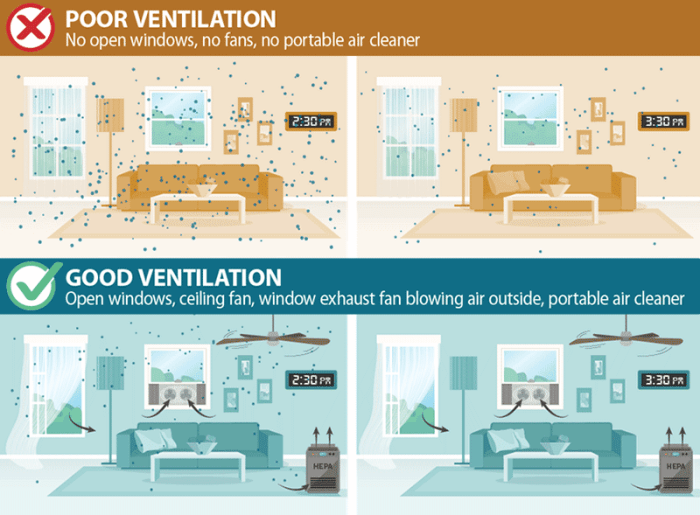
Improving home ventilation is essential for maintaining a healthy indoor environment. By increasing airflow, you can reduce the buildup of pollutants and ensure better air quality. Let’s explore some strategies to enhance ventilation in your home.
Utilize Windows Effectively
Windows play a crucial role in promoting ventilation by allowing fresh air to enter and stale air to exit. Opening windows on opposite sides of a room can create a cross breeze, facilitating better air circulation.
Install Vents in Key Areas
Vents are another effective way to improve air circulation in your home. Installing vents in areas like bathrooms, kitchens, and attics can help remove excess moisture and odors, preventing the growth of mold and mildew.
Use Fans to Enhance Airflow
Fans, whether ceiling fans or portable fans, can significantly improve ventilation by circulating air throughout the room. They can also help distribute cool or warm air more efficiently, depending on the season.
Home Inspections
Home inspections play a crucial role in assessing ventilation issues within a property. By conducting a thorough inspection, homeowners can identify potential problems and take necessary steps to improve air quality.
Common Ventilation Problems
- Poor air circulation due to blocked vents or dirty filters.
- Inadequate ventilation in areas like bathrooms and kitchens, leading to moisture buildup.
- Improperly sized or installed ventilation systems resulting in inefficiency.
- Leaks or gaps in ductwork causing air to escape or enter the home.
- Mold or mildew growth due to excess humidity and poor ventilation.
Addressing Ventilation Concerns
- Regularly clean vents and replace filters to ensure proper airflow.
- Install exhaust fans in high-moisture areas to reduce humidity levels.
- Consider upgrading to energy-efficient ventilation systems for better performance.
- Seal any leaks in ductwork to prevent air leakage and improve efficiency.
- Consult with a professional HVAC technician for a comprehensive inspection and recommendations.
Kitchen Improvements
Improving ventilation in the kitchen is crucial for maintaining good indoor air quality and preventing the build-up of harmful pollutants. Proper ventilation can help remove cooking odors, excess moisture, and airborne particles, creating a healthier living environment.
Installing Exhaust Fans or Range Hoods
- Consider installing an exhaust fan above your stove to remove cooking fumes directly from the source.
- Choose a range hood with sufficient airflow capacity to effectively capture and remove smoke, grease, and odors.
- Ensure that the exhaust fan or range hood is vented to the outdoors to prevent recirculation of contaminated air back into the kitchen.
Impact of Proper Kitchen Ventilation on Indoor Air Quality
Proper kitchen ventilation plays a key role in maintaining good indoor air quality by reducing the concentration of pollutants and improving overall comfort. Without adequate ventilation, cooking activities can release harmful substances such as carbon monoxide, nitrogen dioxide, and volatile organic compounds into the air, leading to potential health risks. By implementing effective ventilation measures, you can minimize exposure to these pollutants and create a safer and healthier home environment.
Home Improvement and Furniture
When it comes to home ventilation, furniture placement plays a crucial role in ensuring proper airflow throughout the house. The way you arrange your furniture can either help or hinder the circulation of air, affecting the overall ventilation of your home. Choosing the right furniture and positioning it strategically can make a significant difference in maintaining a well-ventilated living space.
Impact of Furniture Placement on Home Ventilation
Proper furniture placement can enhance the airflow in your home by allowing air to move freely and circulate effectively. On the other hand, placing furniture in front of vents, windows, or doors can obstruct the natural flow of air, leading to poor ventilation. It’s essential to consider the layout of your space and the placement of furniture to optimize ventilation.
Tips for Choosing Furniture that Doesn’t Obstruct Airflow
- Avoid placing large pieces of furniture in front of vents or air registers to allow air to flow freely.
- Opt for open-back furniture or pieces with legs to prevent blocking airflow along walls and floors.
- Consider using lightweight and movable furniture that can be rearranged easily to promote better ventilation.
- Use furniture with breathable materials to prevent trapping moisture and hindering air circulation.
Relationship Between Home Improvement Projects and Ventilation
Home improvement projects, such as installing ceiling fans, adding windows for cross ventilation, or upgrading HVAC systems, can significantly impact the ventilation of your home. By making strategic improvements and modifications to your living space, you can enhance airflow and create a more comfortable and healthier indoor environment. It’s important to consider ventilation requirements when planning home improvement projects to ensure optimal air quality and circulation.
Flooring
Indoor air quality and ventilation can be significantly impacted by the type of flooring materials used in a home. Choosing the right flooring options can play a crucial role in promoting good airflow and overall ventilation within the living space.
Impact of Flooring Materials
Some flooring materials, such as carpets, can trap dust, allergens, and other particles, leading to poor indoor air quality. Hardwood, laminate, tile, or vinyl flooring, on the other hand, are easier to clean and maintain, reducing the accumulation of pollutants in the air.
Selecting Flooring Options for Good Airflow
- Opt for hard surface flooring materials that are smooth and easy to clean.
- Consider materials that do not trap dust or allergens, such as hardwood, tile, or laminate.
- Avoid wall-to-wall carpeting, especially in areas with high moisture levels like bathrooms and kitchens.
- Choose flooring options with low VOC emissions to prevent the release of harmful chemicals into the air.
Improving Home Ventilation through Flooring Renovations
Updating the flooring in your home can have a positive impact on ventilation by reducing the presence of allergens and pollutants in the air. By replacing carpeting with hard surface flooring, you can create a cleaner indoor environment with better airflow circulation.
Green Living
When it comes to improving home ventilation in an eco-friendly manner, there are several sustainable options to consider. One effective way is to utilize plants for natural air purification, while adopting sustainable living practices can also contribute to enhancing indoor air quality.
Using Plants for Natural Air Purification
Plants are not only great for adding a touch of nature to your home but also play a crucial role in improving indoor air quality. They can help filter out harmful toxins and pollutants, releasing oxygen in return. Some plants known for their air-purifying properties include aloe vera, spider plant, snake plant, and peace lily. Placing these plants strategically around your home can significantly contribute to better ventilation.
Sustainable Living Practices for Enhanced Indoor Air Quality
- Avoid using harsh chemical cleaners and opt for natural alternatives like vinegar and baking soda.
- Properly maintain ventilation systems to ensure efficient air circulation.
- Reduce energy consumption by using energy-efficient appliances and sealing any drafts in your home.
- Consider utilizing natural ventilation methods, such as opening windows strategically to allow for fresh air flow.
Interior Design and Decorating
When it comes to home ventilation, interior design and decorating play a crucial role in optimizing airflow and creating a comfortable living environment. The choices you make in terms of furniture arrangement, decor elements, and overall design aesthetic can impact the air circulation within your home.
Arranging Furniture for Air Circulation
- Place furniture away from air vents to ensure unrestricted airflow.
- Opt for open shelving units instead of bulky cabinets to allow air to circulate freely.
- Create pathways between furniture pieces to facilitate airflow throughout the room.
Decor Elements and Airflow
- Choose breathable materials for upholstery and curtains to prevent trapping moisture.
- Opt for indoor plants that can improve air quality and add a natural source of ventilation.
- Consider using ceiling fans or strategically placing fans to enhance air circulation.
Bath and Shower
Proper ventilation in bathrooms is crucial to prevent mold and moisture issues, which can lead to health problems and damage to the structure of your home. One of the most effective ways to improve ventilation in bathrooms is by using exhaust fans. These fans help to remove moisture and odors from the air, creating a more comfortable and healthy environment.
Importance of Proper Ventilation
Without adequate ventilation, bathrooms can become breeding grounds for mold and mildew, which thrive in damp and humid conditions. This not only affects the air quality in your home but can also cause damage to walls, ceilings, and fixtures. Proper ventilation helps to reduce humidity levels, preventing these issues from occurring.
Tips for Preventing Mold and Moisture Issues
- Use exhaust fans: Install and use exhaust fans in bathrooms to remove excess moisture and odors.
- Keep bathroom doors and windows open: Allow fresh air to circulate by keeping doors and windows open when possible.
- Use a dehumidifier: If your bathroom tends to be particularly humid, consider using a dehumidifier to maintain optimal humidity levels.
- Wipe down surfaces: Regularly wipe down surfaces in the bathroom to prevent moisture buildup and mold growth.
Role of Exhaust Fans
Exhaust fans are essential for maintaining good air quality in bathrooms by removing excess moisture, odors, and pollutants. They help to prevent mold growth, improve ventilation, and create a more comfortable and healthy environment for you and your family. It is important to ensure that your exhaust fan is properly sized and functioning efficiently to maximize its effectiveness.
House Plans
When it comes to improving home ventilation, the layout and design of a house play a crucial role. Properly planned house plans can enhance airflow and natural ventilation, creating a more comfortable living environment. Here are some tips on how to incorporate natural ventilation into house plans and why considering airflow in architectural designs is important.
Incorporating Natural Ventilation
- Include strategically placed windows and doors to allow for cross ventilation.
- Consider the orientation of the house to take advantage of prevailing winds.
- Design open floor plans to promote airflow throughout the house.
- Use skylights or clerestory windows to bring in natural light and air.
Importance of Airflow in Architectural Designs
- Proper airflow helps regulate indoor temperature and reduces the need for artificial cooling.
- Good ventilation can prevent moisture buildup, which can lead to mold and mildew growth.
- Enhanced airflow improves indoor air quality by reducing pollutants and odors.
- Well-ventilated spaces feel fresher and more inviting, promoting overall well-being.
Feng Shui
Feng Shui is an ancient Chinese practice that focuses on harmonizing individuals with their surroundings to promote well-being. When it comes to improving home ventilation, Feng Shui principles can be applied to create a conducive environment for better airflow and energy flow within the home.
Arranging Furniture for Better Airflow
One key aspect of Feng Shui in relation to home ventilation is the arrangement of furniture. By positioning furniture in a way that allows for easy airflow, you can enhance the overall ventilation in your living space. Here are some tips:
- Avoid blocking air vents or windows with furniture to ensure proper circulation.
- Place furniture in a way that allows for a clear pathway for air to flow throughout the room.
- Consider the placement of items such as plants or decor that may obstruct airflow.
Energy Flow and Ventilation
In Feng Shui, energy flow, also known as chi, plays a vital role in maintaining a harmonious living environment. Proper ventilation is essential for allowing positive energy to circulate freely throughout your home. Here are some ways to improve energy flow through ventilation:
- Open windows regularly to let fresh air and positive energy enter your space.
- Use air purifiers or plants to help clean the air and promote a healthier environment.
- Ensure that there are no obstructions blocking the flow of air or energy in your home.
Heating and Air Conditioning
Heating and air conditioning, commonly known as HVAC systems, play a crucial role in maintaining proper home ventilation. These systems not only regulate the temperature inside your home but also help in improving indoor air quality.
Maintaining HVAC Systems for Optimal Airflow
Proper maintenance of your HVAC system is essential to ensure optimal airflow throughout your home. Here are some tips to help you maintain your HVAC system:
- Regularly change air filters to prevent dust and debris build-up, which can obstruct airflow.
- Keep the outdoor unit free from debris such as leaves, dirt, and branches to ensure proper ventilation.
- Schedule annual maintenance checks with a professional HVAC technician to detect and address any issues early on.
Impact of Heating and Cooling Systems on Indoor Air Quality
Heating and cooling systems can significantly impact indoor air quality. Improperly maintained HVAC systems can lead to poor ventilation and circulation of allergens, pollutants, and other harmful particles inside your home. To ensure better indoor air quality, consider the following:
- Invest in high-efficiency air filters to trap more particles and improve air quality.
- Install a programmable thermostat to regulate temperature and humidity levels effectively.
- Consider adding air purifiers or ventilation systems to further enhance indoor air quality.
Elevate your home’s air quality and comfort by implementing the discussed techniques and enhancements. With a focus on ventilation, you can transform your living space into a breath of fresh air.
FAQ Overview
How can I tell if my home needs better ventilation?
Look out for signs like musty odors, condensation on windows, or lingering stuffiness.
What are some eco-friendly ways to enhance home ventilation?
You can use natural air purifiers like indoor plants or consider installing a green roof for improved airflow.
Is it necessary to have ventilation in every room?
While it’s ideal, focus on key areas like the kitchen, bathroom, and bedrooms for better air circulation.


