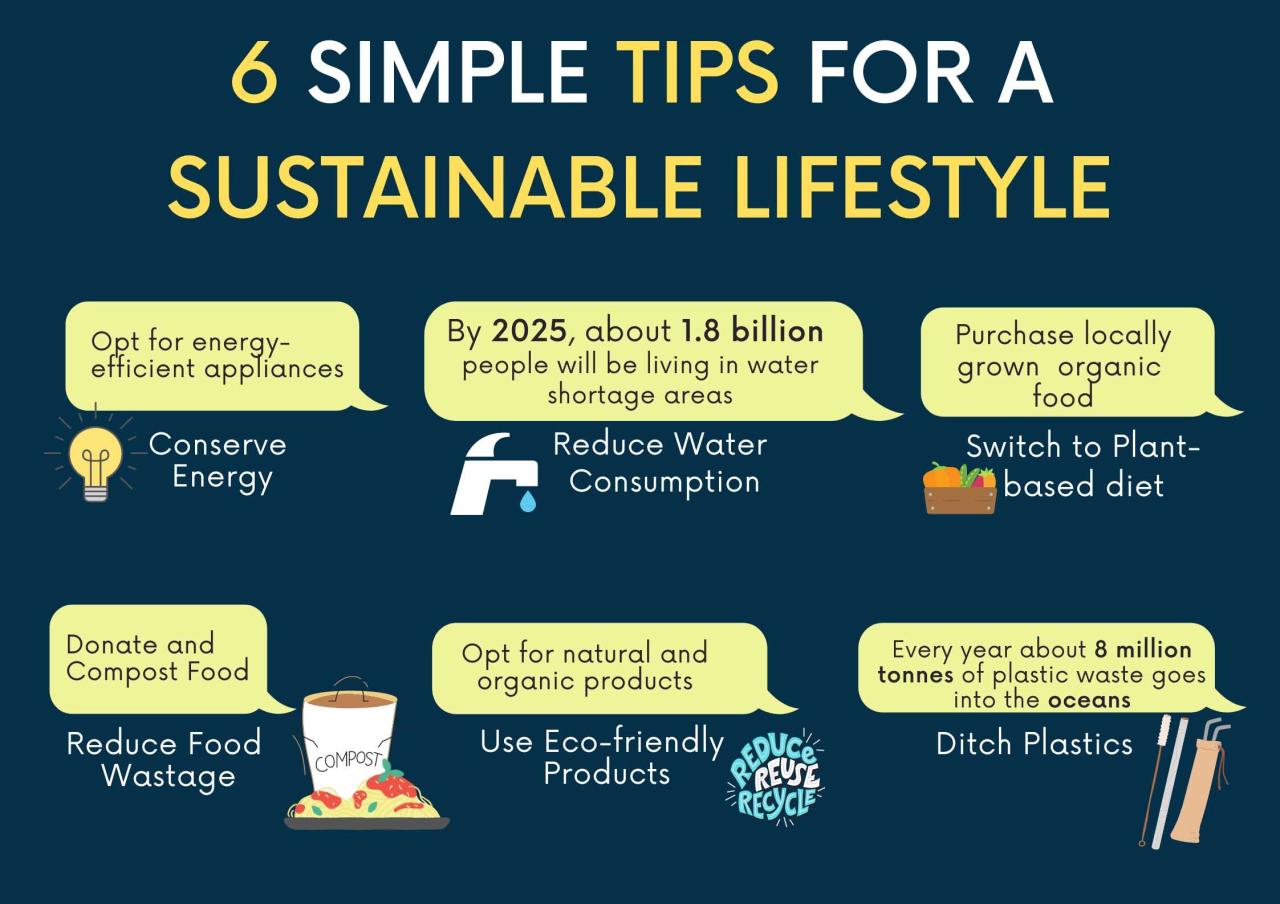
Embark on a journey towards sustainable living with practical tips and insightful advice on reducing energy consumption, composting, and using eco-friendly products. Dive into the world of eco-conscious choices and create a greener, healthier home environment.
Sustainable Living Tips
Living sustainably is vital for the environment and our future. Here are some easy tips to help reduce energy consumption, promote composting, and encourage eco-friendly product usage.
5 Easy Ways to Reduce Energy Consumption at Home
- Switch to energy-efficient LED light bulbs to reduce electricity usage.
- Unplug electronics when not in use to prevent energy wastage.
- Use natural light during the day instead of artificial lighting.
- Set your thermostat a few degrees lower in winter and higher in summer.
- Avoid overloading your washing machine and dishwasher to save on water and electricity.
Benefits of Composting and its Contribution to Sustainable Living
Composting is a great way to reduce household waste and create nutrient-rich soil for plants. By composting kitchen scraps and yard waste, you can divert organic materials from landfills, reduce methane emissions, and enrich the soil with valuable nutrients.
Importance of Using Eco-Friendly Products in Daily Life
- Choose products with minimal packaging to reduce waste.
- Opt for reusable items like water bottles and shopping bags to cut down on single-use plastics.
- Look for eco-friendly cleaning products that are biodegradable and non-toxic.
- Support brands that prioritize sustainability and ethical practices in their production.
- By using eco-friendly products, you can minimize your environmental impact and contribute to a healthier planet.
Home Inspections
When conducting a home inspection, it is crucial to pay attention to key areas to ensure the property is in good condition and avoid potential issues in the future.
Key Areas to Inspect
- Roof: Check for any missing or damaged shingles, signs of water leakage, or structural issues.
- Plumbing: Look for leaks, water pressure problems, or any signs of water damage.
- Electrical System: Ensure all outlets, switches, and electrical panels are working properly and up to code.
- Foundation: Inspect for cracks, water damage, or any signs of shifting or settling.
- HVAC System: Test heating and cooling systems to ensure they are functioning efficiently.
Common Issues and Solutions
- Water Damage: Address any leaks or water intrusion promptly to prevent mold growth and structural damage.
- Pest Infestation: Take steps to eliminate pests and seal entry points to prevent future infestations.
- Faulty Wiring: Hire a professional to fix any electrical issues to prevent fire hazards.
- Poor Insulation: Improve insulation to reduce energy costs and maintain a comfortable indoor environment.
Significance of Regular Inspections
Regular home inspections are essential for maintaining property value as they help identify issues early on, preventing costly repairs in the future. By staying proactive and addressing any problems promptly, homeowners can ensure their property remains safe, comfortable, and in good condition.
Kitchen Improvements
When it comes to creating a sustainable and eco-friendly kitchen, there are several tips and strategies that can be implemented to reduce waste and energy consumption while promoting a healthier lifestyle.Energy-efficient appliances play a crucial role in sustainable living, especially in the kitchen. By investing in appliances that are designed to conserve energy, such as refrigerators, dishwashers, and stoves, you can significantly reduce your carbon footprint and save on utility bills.
Look for appliances with the ENERGY STAR label, which indicates that they meet strict energy efficiency guidelines set by the Environmental Protection Agency.
Designing an Eco-Friendly Kitchen
- Opt for energy-efficient appliances to reduce energy consumption and lower utility bills.
- Choose sustainable materials for countertops, cabinets, and flooring, such as bamboo, reclaimed wood, or recycled glass.
- Install LED lighting to minimize electricity usage and create a bright, inviting space.
- Consider composting food scraps to reduce waste and create nutrient-rich soil for gardening.
Reducing Waste in the Kitchen
- Use reusable containers and bags instead of disposable plastic wrap and bags.
- Buy in bulk to reduce packaging waste and save money in the long run.
- Start a kitchen scrap bin for composting fruit and vegetable peels, coffee grounds, and eggshells.
- Plan meals to avoid food waste and utilize leftovers creatively in new dishes.
Home Improvement and Furniture
When it comes to sustainable living, making conscious choices about home improvement and furniture is crucial. By opting for eco-friendly materials and practices, you can reduce your environmental impact and create a healthier living space.
Comparison of Sustainable Materials in Furniture Making
- Bamboo: Bamboo is a fast-growing and renewable resource that can be harvested without causing damage to the environment. It is durable and versatile, making it a popular choice for sustainable furniture.
- Reclaimed Wood: Using reclaimed wood from old furniture or buildings helps reduce the demand for new timber, preventing deforestation. It also adds a unique, rustic charm to furniture pieces.
- Recycled Plastic: Furniture made from recycled plastic helps divert plastic waste from landfills and oceans. It is durable, easy to clean, and can be recycled again at the end of its lifespan.
Benefits of Upcycling Old Furniture
Upcycling old furniture is a great way to reduce waste and give new life to pieces that might otherwise end up in a landfill. By repurposing and refurbishing old furniture, you can save money, express your creativity, and add a personal touch to your living space.
Incorporating Energy-Efficient Lighting
When undertaking home improvement projects, consider replacing traditional lighting fixtures with energy-efficient alternatives. LED bulbs, for example, consume less energy, last longer, and produce less heat compared to incandescent bulbs. This not only reduces your carbon footprint but also lowers your electricity bills in the long run.
Flooring
When it comes to sustainable flooring options, there are several eco-friendly choices available that can help reduce your carbon footprint. Materials like bamboo, cork, or reclaimed wood are not only environmentally friendly but also stylish and durable.
Sustainable Flooring Options
Here are some sustainable flooring options that you can consider for your home:
- Bamboo: Bamboo is a fast-growing grass that can be harvested without harming the plant. It is a durable and renewable material that is available in a variety of styles and colors.
- Cork: Cork flooring is made from the bark of cork oak trees, which can be harvested without killing the tree. It is a comfortable and insulating material that is resistant to mold and mildew.
- Reclaimed Wood: Reclaimed wood flooring is made from salvaged wood from old buildings, barns, or other structures. It adds a unique and rustic charm to your home while reducing the demand for new timber.
Maintaining Sustainable Flooring
Proper maintenance is key to ensuring the longevity of your sustainable flooring. Here are some tips to help you care for your eco-friendly floors:
- Regularly sweep or vacuum to remove dirt and debris that can scratch the surface.
- Use a damp mop with a mild cleaner to clean the floors, avoiding harsh chemicals that can damage the finish.
- Place felt pads under furniture legs to prevent scratches and dents on the flooring.
Durability and Cost-effectiveness
Sustainable flooring options like bamboo, cork, and reclaimed wood are known for their durability and cost-effectiveness in the long run. While the initial cost may be slightly higher than traditional flooring materials, the longevity and eco-friendly benefits make them a worthwhile investment for your home.
Green Living
Green living involves making conscious choices to reduce our impact on the environment and promote sustainability. By adopting eco-friendly practices in our daily lives, we can contribute to a healthier planet for future generations.
Creating a Green Living Space at Home
Creating a green living space at home is easier than you think. Here are some tips to help you get started:
- Use energy-efficient appliances to reduce electricity consumption.
- Switch to LED light bulbs to save energy and reduce waste.
- Incorporate indoor plants to improve air quality and add a touch of nature to your space.
- Opt for sustainable materials when choosing furniture and decor items.
- Reduce water usage by fixing leaks and installing water-saving fixtures.
Benefits of Using Natural Cleaning Products
Natural cleaning products are a great alternative to traditional chemical-based cleaners. Here are some benefits of using natural cleaning products for a sustainable lifestyle:
- Reduce exposure to harmful toxins and chemicals that can impact your health.
- Minimize pollution in waterways and ecosystems by using biodegradable ingredients.
- Create a safer environment for children and pets who may come into contact with cleaning surfaces.
- Support eco-friendly brands that prioritize sustainability and ethical practices.
Interior Design and Decorating

When it comes to sustainable living, incorporating eco-friendly elements into your interior design can make a big difference. Not only does it help reduce your environmental impact, but it can also create a healthier and more aesthetically pleasing living space.
Ideas for Sustainable Interior Design
- Opt for furniture made from reclaimed or sustainable materials.
- Use energy-efficient lighting fixtures and bulbs to reduce electricity consumption.
- Choose organic fabrics for upholstery and curtains to avoid harmful chemicals.
- Incorporate vintage or second-hand items to reduce waste and add character to your space.
Role of Indoor Plants
Indoor plants not only add a touch of greenery to your home but also play a crucial role in improving indoor air quality. They help filter out toxins and pollutants, creating a healthier environment for you and your family.
Eco-Friendly Paint and Decor
- Look for paints with low or zero VOC (Volatile Organic Compounds) to minimize indoor air pollution.
- Choose sustainable decor items such as bamboo or cork accessories to add a natural touch to your space.
- Consider upcycling or repurposing old items to create unique decor pieces while reducing waste.
- Opt for non-toxic and eco-friendly cleaning products to maintain a healthy indoor environment.
Bath and Shower
When it comes to creating a sustainable bathroom, focusing on water-saving fixtures and organic bath products can make a significant impact. These small changes can contribute to a more eco-friendly and relaxing space.
Water-saving Fixtures
- Install low-flow showerheads and faucets to reduce water consumption without compromising water pressure.
- Consider dual-flush toilets that allow you to choose between a full or partial flush, depending on your needs.
- Opt for aerators on your taps to mix air with water, reducing overall water usage.
Organic and Biodegradable Bath Products
- Switch to organic soaps, shampoos, and body washes that are free from harmful chemicals and synthetic fragrances.
- Look for biodegradable bath products that break down naturally without harming the environment.
- Consider using natural loofahs or bamboo bath accessories instead of plastic alternatives.
Creating a Relaxing and Sustainable Bathroom Space
- Incorporate plants in your bathroom to improve air quality and add a touch of greenery.
- Use sustainable materials like bamboo or reclaimed wood for shelves, cabinets, and other fixtures.
House Plans
Sustainable house plans play a crucial role in reducing carbon footprint and promoting eco-friendly living practices. By incorporating sustainable features into the design of a home, such as energy-efficient systems and environmentally friendly materials, homeowners can minimize their environmental impact and contribute to a more sustainable future.
Passive solar design is a key element of sustainable house plans that utilizes the sun’s energy to heat and cool the home naturally. This design approach involves strategically positioning windows, shading devices, and thermal mass to maximize natural light and heat gain in the winter, while minimizing heat gain in the summer. By harnessing the power of the sun, passive solar design can significantly reduce the need for artificial heating and cooling systems, leading to lower energy consumption and carbon emissions.
Integration of Green Building Techniques
- Utilization of sustainable materials such as bamboo flooring, reclaimed wood, and recycled glass for construction.
- Installation of energy-efficient appliances, lighting fixtures, and HVAC systems to reduce energy consumption.
- Incorporation of water-saving fixtures and rainwater harvesting systems to promote water conservation.
- Implementation of proper insulation and ventilation systems to optimize energy efficiency and indoor air quality.
Feng Shui
When it comes to sustainable living, incorporating Feng Shui principles can help create a harmonious and environmentally friendly living space. By aligning sustainable practices with the ancient Chinese art of Feng Shui, individuals can enhance the energy flow in their homes and promote a more balanced and sustainable lifestyle.
Creating a Harmonious Environment
Embracing Feng Shui in your home can contribute to a more sustainable living environment. Here are some tips to help you create a harmonious and eco-friendly space:
- Avoid clutter: Decluttering your living space not only promotes a sense of calm and organization but also allows for the free flow of energy throughout your home.
- Use natural materials: Incorporate sustainable and natural materials such as bamboo, cork, or reclaimed wood in your furniture and decor to create a more environmentally friendly space.
- Balance the elements: Feng Shui emphasizes the importance of balancing the five elements – wood, fire, earth, metal, and water. By incorporating these elements thoughtfully in your home decor, you can create a harmonious and sustainable living environment.
- Maximize natural light: Harnessing natural light not only reduces energy consumption but also promotes a healthy and vibrant living space. Keep windows unobstructed and use light colors to reflect light throughout the room.
Impact of Decluttering and Organization
Decluttering and organizing your living space according to Feng Shui principles can have a significant impact on sustainable living. Here’s how decluttering and organization can enhance sustainability:
- Improved air quality: Removing clutter and maintaining a clean and organized space can improve air circulation and quality, creating a healthier environment for you and your family.
- Energy efficiency: An organized space allows for better energy flow and circulation, reducing the need for excessive heating or cooling. This can lead to lower energy consumption and a more sustainable lifestyle.
- Emotional well-being: A clutter-free environment promotes mental clarity and emotional well-being, allowing you to focus on sustainable practices and mindful living.
- Enhanced productivity: An organized space can boost productivity and creativity, enabling you to make conscious choices that align with sustainable living principles.
Heating and Air Conditioning
When it comes to sustainable living, energy-efficient heating and cooling solutions play a crucial role in reducing our carbon footprint and saving on utility costs. Proper insulation is key to keeping our homes at a comfortable temperature while minimizing energy consumption. Regular maintenance of heating and air conditioning systems is essential for ensuring optimal performance and longevity, ultimately contributing to a more sustainable lifestyle.
Energy-Efficient Heating and Cooling Solutions
- Consider installing a programmable thermostat to regulate temperatures based on your schedule and reduce energy usage.
- Explore options such as heat pumps, geothermal systems, or solar heating to harness renewable energy sources for heating and cooling.
- Ensure proper sealing of windows, doors, and ducts to prevent heat loss and improve efficiency.
Benefits of Proper Insulation
- Effective insulation helps maintain consistent indoor temperatures, reducing the need for heating and cooling systems to work overtime.
- By minimizing heat transfer through walls, floors, and ceilings, insulation can significantly lower energy bills and decrease carbon emissions.
- Proper insulation also enhances indoor comfort by preventing drafts and maintaining a more stable environment throughout the year.
Importance of Regular Maintenance
- Scheduling routine maintenance for heating and air conditioning systems can improve their efficiency and lifespan, preventing costly repairs or replacements.
- Regular inspections and tune-ups help identify potential issues early on, allowing for timely repairs and adjustments to optimize performance.
- Clean filters, ducts, and coils ensure proper airflow and air quality, promoting healthier living conditions and reducing energy consumption.
In conclusion, embracing sustainable living tips not only benefits the environment but also enhances your quality of life. By making small changes in your daily routine and living space, you contribute to a more sustainable future for generations to come. Start your eco-friendly journey today and experience the positive impact firsthand.
Essential FAQs
How can I reduce energy consumption at home effectively?
To reduce energy consumption at home, you can start by using LED light bulbs, unplugging electronics when not in use, and investing in energy-efficient appliances.
Why is composting important for sustainable living?
Composting helps reduce waste sent to landfills, enriches the soil, and reduces the need for chemical fertilizers, promoting a more sustainable ecosystem.
What are some innovative ideas for reducing waste in the kitchen?
You can reduce kitchen waste by meal planning to avoid food spoilage, using reusable containers for storage, and composting organic waste like fruit and vegetable scraps.


